Carolee Noury, Writer
  • Home
  • About
  • Experience
  • Testimonials
  • Contact

Openly Working Mom or Mum's the Word?

6/4/2014

 
A career question from a friend inspired this post.
What should I write on my resume to explain my time as a stay-at-home mom? Is it better not to mention it?

With so many stay-at-home-parents planning to return to work once their children are ready for daycare/preschool, this is an important question. We know how many talents parenthood has strengthened and developed. 

Seriously, how many other jobs are 24-7?

There are two ways to go about this.

The first is to include it on your resume, and thereby introduce it into your interview.

Pros: 
  • Your potential boss knows up front that being a parent is important to you
  • During interviews you don’t have to measure every response you give based on whether it will out you as a parent 
  • You’ll have less cleaning up to do on your “electronic resume” (everything that turns up on an internet search for you)
  •  If the interviewer knows you’re a parent, and has concerns, you can address them and keep the focus on you as a candidate

Cons: 
  • Your potential boss knows up front that you are a parent and you consider it important work
  • If you’re tied with another candidate and the boss needs something to tip the scales, this would most likely tip them away from you

Why is parenthood often a hiring “con”?

Despite much evidence to the contrary, for example:
  • Companies with women at the helm have healthier bottom lines; 
  • Working parents have lower than average rates of missed work

Hiring managers, even parents themselves, expect parents to be less invested employees. Yet again stereotype out-muscles truth.

The second option is to hide it by removing months from your resume and sticking to employment years.
(And reducing the appearance of the time gap.)

If the gap is too large you can fill it without mentioning your children: 

What else were you doing then? 

Freelancing, 
providing childcare, 
volunteering, 
taking classes, 
research, 
part time work, etc. 


Reverse the “pros” and “cons” list above. Then, add this pro: 

  • You’ll have more interview time to focus your responses on your achievements without having to explain how you’ll balance your work and family commitments. 

And this con: 
  • Perhaps that electronic resume cleanup left some cobwebs—she knows you’re a parent, but since you didn’t mention it she can’t gauge how this will impact your work.

More often than not, this choice--to tell or not to tell—boils down to how many options you have. 

Are you in high demand in the workforce? 

If so, talking about your dual role can help you decide if the position is your best option. 

Or, if there’s more competition and this would be too much of a risk, you’ll work out the parenting-workday challenges as they arise.

As for putting it on the resume, with sadness, I recommend you don’t. “Stay at Home Mom/Dad” still carries too many misconceptions. Which raises the question—how do we annihilate the foolish stereotypes?

A Classic: The Mom Song
The Great "There Are No Jobs" Hoax

2/17/2014

 
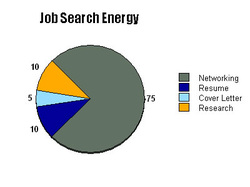
CN GraphThe Complicated Graph of Energy Use
Know one of these people? They hate their jobs, but they aren't looking for a new one.

Why? Because, they tell you, there are No Jobs out there! 

I won't argue the job market isn't suffocatingly difficult these days. But it isn't true that there are no jobs. 

According to the Job Openings and Labor Turnover Survey (JOLTS) program, we had nearly 4 million job openings in the U.S. this past December (2013).

So really--there are jobs! When someone tells you otherwise, tune her out. The most important thing to keep in mind when considering the competition is you must be the most desirable candidate. 

There are so many ways to do that. The more you do to set yourself apart from other candidates, the more air there is to breathe. Keep reaching for the top.

Joey: If you ask me, as long as you got this job, you’ve got nothing pushing you to get another one. You need the fear.
Rachel: The fear?
Chandler: He’s right, if you quit this job, you then have motivation to go after a job you really want.
Rachel: Well then how come you’re still at a job that you hate, I mean why don’t you quit and get ‘the fear’?
(Chandler and Joey laugh.)

Chandler: Because I'm too afraid. 
--Friends, Season 3, The One Where Rachel Quits


Tools for getting to the summit:

  • Resume--Learn basic marketing tools to apply to your resume. Spend time listing your major professional accomplishments and make the specifics the meat of your resume. Get a professional proofread. If you don't have access, high school and college students are excellent at spotting grammatical errors and things that cause confusion. (Seriously.) 
  • Cover Letter--Do not have a "one size" mentality when it comes to this important tool. Seriously, if you look at your cover letter as a necessary evil, you're missing the point. This is the place where you get to make yourself known--in your own voice. Are there things you really want to emphasize? Here's your chance to talk and not just summarize (resume style). Show how much you know about the company, the position, and the team. Make an impact.
  • Network--The single best way to secure a job interview is to network your way in. A friend of the hiring manager, a current staff member, whoever it is that can help you get your foot planted firmly in the door. This is your chance to connect yourself to the job before you sit in the hot(interview)seat. 
  • Commit to the Search--There are all kinds of scary numbers I could throw at you here. The worst is probably: If you're employed, you need to commit 20 hours a week to the search. If you're not employed, it needs to be 40--treat finding a job like a full time job. 
  • While I agree with the concept as advice, I will not tell you it's the only way. How many of us can get done in 4 hours what it takes someone else 12 to do? Learn to make the hours you have count: network; hone that resume; scrap the endless online applications for jobs with which you have no direct connection; write fresh, original cover letters.
  • During those hours, stay focused. Shut down the browser, keep personal email closed, turn your ringer off. Commit your energy to the job search and save enough energy to do all those fun things later--you might even end up with something exciting for your Facebook status.
  • Network (it's worth repeating)--It really is the best way. Make sure you read up on networking--it's an art as much as resume writing and interviewing. If we were talking percentages, I'd suggest you put 75% of your effort here.
Picture
Resources

1. The Job-Hunter's Survival Guide by Richard Bolles
2. Resume Magic by Susan Britton Whitcomb
3. Shortcut Your Job Search by Kate Wendleton, The Five O'Clock Club

*Also, see others linked within the text above

    Archives

    June 2014
    March 2014
    February 2014

    Categories

    All
    Career
    Career Toolkit
    Cover Letter
    Debt
    Introversion
    Job
    Job Search
    Negotiation
    Networking
    Resume
    Salary Negotiation
    Student Loans
    Working Parent

    RSS Feed

Photos from TMAB2003, nggalai, uitdragerij, bjornmeansbear, JLB Creatives Publishing ~ JLBCreatives.com, martinak15
  • Home
  • About
  • Experience
  • Testimonials
  • Contact